


30 Days of Prayer for Muslims

God’s Word Is Never Chained
MAR1-19

Many Muslims come to know Jesus through the Gospel of John. This month, we encourage readers to read through this book in its entirety, practicing lectio divina each day, meditating on one verse at a time and turning Scripture into prayer and action.

The intercessory materials for February 18 to March 19 are reproduced, with permission from OM. We gratefully acknowledge their permission.


This month, let us pray together
that during Ramadan,
God’s Word will continue to open hearts,
for the Word of God is never chained.


Muslims that Read the Bible

During Ramadan each year, we join the global church in 30 Days of Prayer for the Muslim World. This year, we have specially gathered thirty testimonies of Muslims who came to faith in Christ through reading the Bible. These stories reveal the power of God’s Word, able to cross every boundary and overcome every limitation. When God’s Word enters the human heart, it accomplishes His work.

Among these testimonies are people who read the Gospel of John and recognized Jesus as the one and only Savior. Others were drawn by the God revealed in Scripture and discovered that He longs for a personal relationship with humanity, deeply moving their hearts. Some were shaken by Jesus’ love in laying down His life for sinners. Others, fleeing war or wandering without direction, found answers to life in the pages of Scripture. Still others, former extremists or prisoners, encountered the Bible behind bars. As they read of Jesus forgiving sinners, they came to understand that God is not only a judge, but also a God who forgives and heals, and their lives were radically transformed.

There are also many who studied the Bible alongside Christians and, under the light of truth, chose to believe in Jesus. Some even began reading Scripture with the intent of refuting the Christian faith, only to be won over by the depth and coherence of biblical truth, and by the love of Jesus, finding their life direction forever changed.


A Sacred Encounter Within the Pages

The Bible is not merely a religious text, a system of doctrines, or a book of historical insights and moral teachings. The Bible is the Word of God, “God-breathed” (2 Timothy 3:16). Every word and every sentence does not arise from human imagination, philosophy, or experience, but comes from the eternal God, carrying heavenly authority and the power to transform hearts.

No other book in human history has crossed time and culture as the Bible has, bringing people of vastly different backgrounds, languages, and circumstances into a real encounter with the Creator. The Bible is God’s chosen vessel of revelation for all humanity, revealing who God is, who we are, why we exist, where our brokenness comes from, and how we may receive the only true salvation.

Regardless of ethnicity, social status, cultural background, or religious tradition, anyone who is willing to open the Bible and open their heart can hear God speak through it. In this month’s thirty testimonies, many Muslims encountered God precisely in this way: by reading Scripture, hearing God’s voice, being pierced by His Word, repenting, believing in Christ, and experiencing a complete transformation of life.


The Wonder of Bible Translation

In today’s information age, Muslims have greater access than ever to digital Bibles, audio-visual Scripture resources, and even direct interaction with Christians through social media, enabling them to engage the gospel more actively.

Our short-term missions team once visited a sensitive region where local missionaries recognized this opportunity and began investing in audio Bible translation several years ago. Portions of both the Old and New Testaments have now been completed. What is especially moving is that many of those involved in the translation work are not Christians, but Muslims. Each week, they “work” alongside Christians, engaging in in-depth discussion over every verse being translated. We earnestly pray that they would not see this merely as a job, but that God’s Word would touch their hearts and lead them to open themselves to Jesus as Lord. We also pray for their safety, for if their participation in Bible translation were discovered by the community, they would face grave danger.

The greatest challenge of this ministry is the tension between the desire to make the audio Bible widely accessible and the reality that such work is considered illegal in the local context, requiring extreme caution and secrecy. May the Lord grant wisdom to the local workers, that they would not lose heart amid every challenge, but press on in reliance on Him.


Islam and Christianity
Foundational Positions and Shared Language


Islam
Christianity
Shared Language
Identity

Accepts ʿĪsā (Jesus) as al-Masīḥ (the Messiah) and as one of the prophets (Qur’an 4:171)

Jesus is the Son of God, God incarnate

Acknowledges Jesus as coming from God and sent by God

Birth

Accepts that Jesus was born of the virgin Maryam (Mary), without a human father (Qur’an 19:19–21)

Jesus was conceived by the Holy Spirit and born of the virgin Mary

Affirms the miraculous birth of Jesus

Divinity

Denies that Jesus is God and rejects the Trinity (Qur’an 5:116)

Affirms Jesus as fully God and fully human

Jesus performed miracles, spoke truth, and came from God

The Cross

Denies that Jesus was crucified, viewing it as a substitution event (Qur’an 4:157)

Affirms that Jesus died for atonement and rose again

Jesus is seen as one who suffered and obeyed God

Scriptures

Accepts the Torah (Tawrat), Psalms (Zabur), and Gospel (Injil) as revelations from God

Holds that these scriptures were later corrupted, and that the Qur’an is the final and complete revelation

Considers Arabic the original language of revelation

The entire Bible is God-breathed

The Bible is the Word of God, preserved throughout history

The Bible includes Hebrew, Aramaic, and Greek

Belief that God revealed scriptures through prophets

Reverence for Moses, David, and Jesus

Emphasis on original texts and correct interpretation

Salvation

Emphasizes pleasing God through deeds; denies original sin

Emphasizes forgiveness of sins and grace

Recognition of the need for forgiveness and salvation

Attributes
of God

Emphasizes God’s absolute power, majesty, and judgment

Emphasizes both God’s justice and His love

God is righteous and judges with justice

Note: Mobile users may swipe left or right to view the full content
Biharis in Bangladesh

01Mar

Nadim is an Urdu speaking Bihari whose forefathers came to Dhaka after the partition of India. Caught up in the events of political changes, the Biharis became an impoverished minority people group living in camps in Bangladesh. They are considered an unreached people group and only a handful of believers exist among them.

Nadim worked as a sari designer making patterns for the silk sari weaving cottage-industry that his people are famous for. As the fashion for wedding saris shifted from silk to other types, it became more and more difficult for him to feed his family. One day while he was minding a friend’s shop, the owner came in and threw a couple of books on the counter. “Look here,” he said “the Christians are distributing their book for free on the street because of Christmas. I will try to make some money by selling them here.’’ Nadim took a New Testament home and started reading that night. From then on, he read every night. The more he read, the more his desire to know Christ grew.

One day he met a young evangelist who lived in that area. They started talking and, with the input of several people, Nadim heard the gospel clearly explained. After embracing Jesus as his Saviour, his wife and mother-in-law came to faith as well. Nadim has learned the path of repentance in the years since but now leads a small church in his home.

Prayer

Heavenly Father, You are the Lord of mercy and salvation, and You are doing a new work among the Bihari people. May those who are persecuted and rejected discover their precious identity in Christ as children of God, and hold fast to the hope found in Jesus. As it is written, “They cried to the Lord in their trouble, and He delivered them from their distress.” We ask that You send people to reach the Biharis living in the slums, to help improve their living conditions, equip them with skills and meaningful work, and enable them to build stable lives in Bangladesh. May Bihari youth be given opportunities for education and access to the Scriptures through every possible means, so that they may come to know the truth, for “the truth will set them free.” In the name of our Lord Jesus Christ, Amen.

Muslims in Thailand

02Mar

James relaxed in his airplane seat, relieved to be heading off to a Christian conference and a few days of rest. As he thought about the week ahead, he felt God say to him: “Tell the lady sitting next to you that I know her and love her.”

James glanced over at the young hijab-wearing Muslim lady, unsure at how to strike up a conversation. Culturally, it would be awkward for him as a man to start chatting with her. But he did it anyway.

“Asalaam alaikum”, he greeted her. “Sorry to bother you, but I am a Christian, and a few minutes ago, I felt God wanted to tell you that He sees you and knows you. And that He loves you, too.”

Saripa’s eyes opened wide, as she stuttered back: “You’re a Christian?!? I have just been reading the Bible. Can you help explain it to me?”

“Yes, of course”, James said in shock, as he marveled at God’s ways. “But where do you live? Maybe my wife can meet with you to explain more.” She proceeded to tell James that she lived in the exact city he was working in. And then they realized that they lived in the same neighborhood, and, in fact, on the very same street! God was indeed at work in their family and bringing a hunger for His Word.

Later that week, James’ wife reached out to Saripa and the two began a study of Scripture that only God himself could have orchestrated.

Prayer

Heavenly Father, Your love for the world is vast and deep. Even before we ask, Your hand is already at work in the hearts of Muslims. We pray that every Thai Muslim who is curious about Jesus will be met by believers who walk alongside them, study the Scriptures with them, and help them come to know the saving grace of Christ. As Jesus taught us to pray, “Ask the Lord of the harvest to send out workers into His harvest field,” we ask You to send missionaries to the Muslim communities of Thailand, to guide those whose hearts are already open to truly know Jesus. We also pray for the renewal of churches in Thai Muslim regions. Though they may only have “a little strength,” we ask You to use them powerfully as a blessing to the Muslim communities around them. In the name of our Lord Jesus Christ, Amen.

Azerbaijan

03Mar

About six years ago, Yusif had back surgery. The recovery was long and painful, and he was confined to bed.

As he lay in bed in Guba, a city in northern Azerbaijan, he thought a lot about his life. He had grown up in a Muslim culture, but he began to question it. As he was searching for truth, he found the New Testament on the internet and started reading it. A great comfort, joy and peace came to his heart. He had never known such joy and comfort. He begged the God of the Bible: “Heal me so that I may stand up and dedicate my whole life to You. I will learn about You and believe in You.”

And God healed him. Yusif got out of bed and was able to work again.

One day, he came across social media content from Azerbaijani believers. Because he had loved reading the New Testament online, he wanted a physical copy to read as well. He connected with the believers via social media and requested one. When Kamil visited and presented him with a New Testament, Yusif told him, “I already believe in Jesus Christ.”
Right then and there—in the middle of the street—Kamil led Yusif in a prayer of repentance, and he accepted Jesus Christ as his Lord. Soon, his family began to follow Jesus, and now they faithfully attend a small church in their region.

Prayer

Heavenly Father, we pray that Your mighty hand would reach beyond every barrier of circumstance and every limit of the human heart, touching all who hunger for truth and long for transformed lives. Turn their hearts so that they may live for You. We ask that You protect and strengthen believers in Azerbaijan, providing them with spiritual resources and faithful shepherds to nurture them, so they may grow into vibrant disciples with the courage and wisdom to share Your love with family and friends. We also pray that You would send missionaries into Azerbaijan to help seekers come to know Christ, and that Christian fellowship would extend to towns where there is still no church. May You greatly use online ministries, so that through social media and digital platforms, the people of Azerbaijan may encounter the Scriptures and the witness of believers. In the name of our Lord Jesus Christ, Amen.

The Shabaks of Iraq

04Mar

The Shabaks are a minority ethnic group living mostly on the so-called Nineveh Plains, east of Mosul. Numbering around half a million, they’ve often suffered from oppression and neglect. Most Shabaks follow Shia Islam, with a minority being Sunni Muslims. A small number have come to know God as their loving father who rejoices in repentant sinners.

There is currently no Scripture available in Shabaki but a team is working on translating the Gospel of Luke into their language. Salim, an older Shabak man, helps with testing translated Bible chapters for comprehension.

When he was given Luke 15 to read, Salim was sure he had identified the turning point in the parable of the prodigal son, understanding it to say: “While he was still a long way off, he saw his father, ran to him, threw his arms around him and kissed him.” In Salim’s world, this was the only way to interpret the passage as the God he knows wouldn’t run to reach the lost. The parable was just as confusing to him as it must have been to the original audience that Jesus spoke to!

The team clarified that no, the passage was about God the Father running towards the sinner. A few weeks later, Salim started meeting and praying with a believer.

Prayer

Heavenly Father, it is only because Christ died for us while we were still sinners that Your love has been made known. May the Shabak people, like the younger son returning home, see the Father waiting for them with open arms, ready to embrace them with great love. We ask You to bless the translation of the Gospel of Luke into the Shabak language. May it be completed and published smoothly, so that as people read, they understand, their hearts are stirred, and Your word is passed from person to person, spreading widely throughout the region. We also pray that You would open the way for the full Shabak Bible to be completed soon, so that people may clearly know Your heart from the beginning of time to all eternity. Lord, may Your kingdom come to the Nineveh Plain, and may the Holy Spirit move the people of this land to turn to You in humility. In the name of our Lord Jesus Christ, Amen.

Jihadists in Burkina Faso

05Mar

It was market day in a small village in eastern Burkina Faso. Suddenly jihadists came and began threatening the people. A young Christian had positioned his small radio on the market well, with a broadcast about Jesus in Fulfulde. In his panic, he forgot to switch it off.

One of the terrorists came to the well and started listening. “Whose radio is this?” he asked. After a long time of silence, an older man said: “It belongs to this young man.” The jihadist kept listening to the message, while his comrades kept threatening the villagers. Finally, he took the radio without any more words.

After a week, the terrorists came to the market again – including the one who had taken the radio. He looked for the young owner of the radio, and when he couldn’t find him, addressed the old man who had pointed out the young man a week ago. “The message in the radio was very good! Where can I find a second one?”

The jihadists need the Good News, too. But who will bring it to them? According to a 2022 report by the United Nations Development Program, poverty and unemployment, and not religious conviction, are the main reasons that people in Africa join extremist groups. Christians allow fear to prevent them from praying for terrorists as well as investigating solutions for the material needs that drive people into extremism.

Prayer

Heavenly Father, grant us the love and compassion that come from You, so that we may truly understand the lives and inner needs of those drawn into holy war, and intercede for them with hearts shaped by Your mercy. We ask You to halt the damage that corruption has brought to Africa. Let Your justice and righteousness come upon this land. Renew the hearts of leaders and officials, and shake the systems and powers that distort human dignity, so that people and communities may receive the resources and care they deserve, and the cycles of poverty and injustice may be broken. Holy Spirit, we ask that You move powerfully, touching the hearts of those involved in violence and terror, giving them the opportunity to hear the gospel, to be deeply moved by the love of Jesus, and to receive the free gift of salvation. In the name of our Lord Jesus Christ, Amen.

Uzbekistan

06Mar

Some years ago, Gulnora visited an Uzbek village. “The mullah proudly showed me the new mosque and probably expected criticism from me as a Christian. But I praised the mosque and said that I hoped that God’s word would be preached there. He was surprised, and when I gave him a copy of the New Testament in Uzbek he took it, touched it with his lips and forehead and finally held it close to his heart. A group of men had gathered around us and when they saw how the mullah received the New Testament with such honor, they also wanted books, but unfortunately I did not have any more with me.”

“Recently I travelled back to the same village,” she said. “The mullah had heard about my arrival and came towards me on the road. While still far off, he called out: “My daughter! You’ve returned at last! Do you remember that when you were here last time you gave me the New Testament in Uzbek? I am so grateful to you! Now I know every Friday what to read in our mosque, and I have a holy book which shows the way to God in my language. The other books that I have I could not understand, but this one helps me to prepare my sermons and give hope to those who listen!”

Prayer

Heavenly Father, “Your word is living and active, sharper than any double-edged sword. It pierces even to the dividing of soul and spirit, joints and marrow; it judges the thoughts and intentions of the heart.” We pray that many in Uzbekistan would have the opportunity to read the Bible in their own language and discover that You are speaking to them, that You are a loving Father who desires to give them abundant life. We also pray for greater religious freedom in Uzbekistan, so that people may have more opportunities and pathways to encounter the gospel. We lift up the safety and growth of house churches, and ask You to provide shepherds for Uzbek believers, so that they may grow in spiritual maturity, stand firm in their faith, and remain strong. In the name of our Lord Jesus Christ, Amen.

The Western Cham of Cambodia

07Mar

The Western Cham are a Muslim people group with their own language who have lived in Buddhist majority Cambodia since the 17th century. Traditionally fishermen and farmers, they were severely persecuted under the Pol Pot regime, with more than a third of their population massacred in the 1970s. They now number about 600,000.

Mei is an elderly Cham woman in her eighties who lives in a small village about 3 hours from Phnom Penh with her children, grandchildren and great-grandchildren. The gift of a New Testament in her own language on a small audio player fed Mei’s curiosity about the gospel and she began working through the Bible narratives with two believers who visit her village regularly. Then, one night Mei had a vivid dream about Jesus judging the people of the earth, sending them to heaven and hell. This convinced her that He was the way the truth and the life.

Today she is eager to share her faith whenever she meets family and friends. Two daughters and two great granddaughters regularly join with her and the two believing visitors to pray, eat and study stories from the scripture. The meetings are open for others to join. Sometimes one of their husbands joins them. Recently around ten more people were baptized so the small community of faith is growing.

Prayer

Heavenly Father, we ask that You speak to the Cham people through the Cham-language audio Bible and other spiritual resources, so that they may understand Your word and come to know You. May more believers like Mei seize opportunities at weddings, funerals, and everyday gatherings to share Your word and naturally pray for those in need, so that the gospel may flow like a spring among the Cham communities of Cambodia. May more families join Christian fellowship and grow in spiritual health and maturity. As the Lord says, “If you remain in me and my words remain in you, ask whatever you wish, and it will be done for you.” May Your word dwell in the hearts of the Cham people, and may their prayers be answered. In the name of our Lord Jesus Christ, Amen.

Asylum Seekers of Europe

08Mar

Hussain grew up as the only child of a moderately Muslim couple, but within a fundamentalist Islamic regime. In his mid 20s, Hussain worked in a fitness centre where one of his workmates was a follower of Jesus. One day, they had a discussion about the Bible and, as a parting gift before moving to another city, his colleague gave Hussain a copy of the New Testament in his own language.

Hussain read the Scriptures from cover to cover and had many questions. However, there was no-one with whom he could safely talk. Even so, as he read, he experienced the presence and peace of God, and became convinced that Jesus’ words are life and truth. Although supportive of their son’s new beliefs, his parents warned him to keep them to himself. And so Hussain remained alone as a believer for the next five years.

During that time, the Islamic regime became more and more repressive. Hussain knew that if he stayed, eventually he would be caught and killed, and so he decided to run to a safe European country, where he finally met other Christians and was baptized.

Two years have passed and Hussain is still fighting for refugee status in his adopted country. He works hard to learn the language, and dreams of going to university to become an engineer. However, there is still a chance he might be rejected and deported to his homeland, where he would almost certainly be imprisoned.

Prayer

Heavenly Father, we pray that refugees from Muslim backgrounds may soon find new homes where they are welcomed and able to stand firm within their new communities. In Scripture, You often remind us how to treat those who live among us as foreigners: “The foreigner who resides among you shall be to you as the native among you, and you shall love him as yourself, for you were foreigners in the land of Egypt. I am the LORD your God.” Move the hearts of Christians to show kindness to those who are far from home and to live out the love of Christ. Grant them wisdom and fitting ways to share the gospel with their Muslim neighbors. We also ask You to provide companions and the spiritual resources needed for every Muslim who longs to read Your word. In the name of our Lord Jesus Christ, Amen.

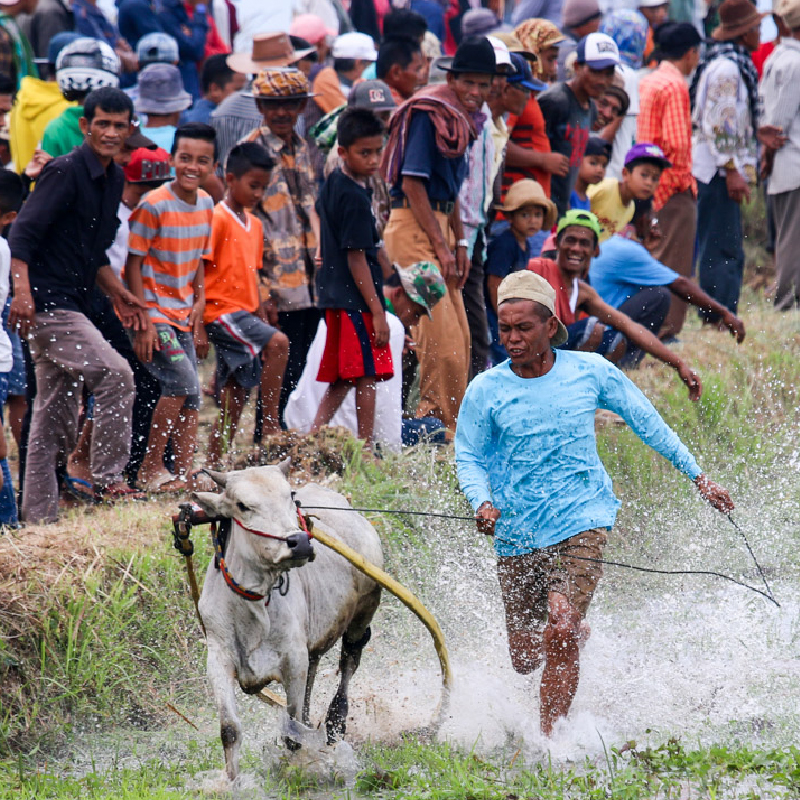
The Minangkabau in Indonesia

09Mar

There is a famous Minang poem that concludes with the line: alam takambang jadikan guru (nature becomes the teacher). Zul, who grew up and still lives in the rural heartland of the Minangkabau people, would have heard this poem. The ‘nature’ he was taught to conform to is a complex interplay of the natural world, social expectations and traditional and religious obligations.

Although religious tradition is strong, education is also highly prized, particularly by Zul’s father who taught Zul to search for knowledge wherever he found it. Zul has, therefore, been bold enough to look beyond his culture and reach out for a copy of the Bible. He has read it, from cover to cover, and warmly received believers who visited him and answered his questions. Now he is sharing this treasure with others.

Sadly, this sort of receptiveness is not common. Minangkabau are one of the most strongly Muslim people groups in Indonesia and opportunities for them to hear or read the Word of God have been limited. Furthermore, most fear the Bible - having been taught that it is dangerous.

Prayer

Heavenly Father, we ask that You send the Helper, the Holy Spirit whom the Father sends in the name of Jesus, to personally teach the Minangkabau people who hunger for Your word, so that they may understand what they read and joyfully share the light they receive with others. May You remove fear of the gospel and the Bible from their hearts, replacing it with curiosity and openness, so that they may have opportunities to read and hear Your word. May they discover that the gospel brings hope to the hopeless, direction to the lost, truth and the way of salvation to those who hunger and thirst for righteousness, and the warmth and comfort of God’s presence to the lonely. Like a deer that longs for streams of water, may the Minangkabau people be refreshed by the living water of Your word, and may their lives be filled and renewed. In the name of our Lord Jesus Christ, Amen.

The Saraiki of Pakistan

10Mar

Shakir is one of 26 million Saraiki speakers who live in the Southern Punjab in Pakistan. The area is predominantly rural and poor, despite providing much of the country’s wheat, cotton, sugarcane and mangoes. In recent years, flooding has devastated some areas, pushing people into greater poverty.

The Southern Punjab is proud of its ancient history and its beautiful handicrafts, mystic poetry and the many shrines dedicated to Sufi saints. Festivals held around these saints bring thousands of people who daily come in search of physical or mental healing, solutions for personal and financial problems and other life challenges. People are desperately seeking for a power that can bring meaning and transformation to their lives.

Shakir was one of those people: “I was very religious from a young age,” he says, “following all the Islamic practices strictly. I used to hate non-Muslims, especially Christians. One day, I had a dream telling me to stop the hatred. After that, I started seeking friends outside my faith. Social media exposed me to Jesus Christ’s teachings, which touched my heart deeply and a brother I met through Facebook began teaching me about Him. This led me to read the New Testament, especially the Gospel of John, which strengthened my faith. Eventually, I received a complete Bible and continued to grow in my faith. I accepted Jesus Christ sincerely, knowing humanly speaking this would bring me difficulties. Please pray for me to be strong in this new Christian journey and for my family to come to know Christ.”

Prayer

Heavenly Father, many among the Saraiki people are searching for the meaning of life. We ask that they may encounter Jesus and come to know that only the Lord can satisfy the deepest longings of their souls. Many Saraiki families are struggling under heavy burdens. Reveal to them that You are a God who willingly shares their load and meets them with compassion and a gracious smile. May they experience Your living and faithful presence through dreams, visions, and prayer. Use social media to carry the gospel into their daily lives, helping them build relationships with Christian friends and come to know Your truth. We also ask that You protect the local fellowships, granting believers wisdom and courage to stand firm in following Jesus and to recognize opportunities to share their faith. In the name of our Lord Jesus Christ, Amen.

Palestinians in Jordan

11Mar

Eve, one of the many Palestianians living in Jordan, came to our clinic with back pain. Amongst the many desperate and demanding people, she had a kind and sincere heart.

Eve desires to please God and know the holy books so she goes to Qur’an classes each week at her local mosque. We invited her to a woman’s exercise class and quickly decided to train her to become the class coach. As we visited each week, she poured out her heart. The gossip and suspicion between extended family members, living in the same building. Her husband’s debt. The deep pain caused by the rejection from her stepsons. Her husband didn’t want to get involved. She ached for peace.

We longed to read the Bible with her and she agreed! She drank in the prophet stories of the Old Testament. ‘Do Christians still have to offer sacrifices, like Abraham and Moses did?’ We replied, ‘Wait and see’. Week by week, she asked her question. Finally, we said, ‘We do have a sacrifice, but it is very expensive.’ Curious, she mused, ‘Expensive? Maybe a camel?’ We got to Isaiah 53. ’This is about Jesus isn’t it? He’s the sacrifice.’ She paused. ‘But is he the sacrifice for ALL people?’ We replied excitedly, ‘Yes, for ALL people who trust in Him!’ She looked flat. ‘I do believe Jesus is a prophet, but the Qur’an says he didn’t die.’ We weren’t surprised, though were disappointed. ‘But I’d still like to keep reading with you.’ The Word of God has captured Eve’s heart, but Islam blinds her.

Prayer

Heavenly Father, we pray that the Holy Spirit will continue to work in the hearts of the Palestinian people in Jordan, helping them to understand and receive Jesus as the only way, the truth, and the life. We especially lift up Muslim women, who face many challenges in their daily lives. When they cry out to You, hear their prayers and respond personally, so that they may truly experience Your presence and faithfulness and entrust their lives into Your hands with peace. We also ask that You open doors for missionaries to reach and walk alongside Muslim friends who long to know You. Bless all their efforts, that their work may bear fruit and be filled with Your grace and wisdom. In the name of our Lord Jesus Christ, Amen.

Dagestan

12Mar

Kamiila was born into a large Muslim family in Dagestan, a mountainous region that has traditionally been one of the least-receptive places to the gospel. Even as a young girl she was headstrong and independent, refusing to do her namaz (Muslim prayers). Her father told her that Allah would severely punish those who disobeyed him. This caused Kamiila to question if God was really like her father. “If he is like that, then I don’t want to believe in such a God!”, she thought.

When Kamiila was 12 years old, she saw a woman sitting on the seashore reading a book so she approached her and asked, “What is the name of the book you are reading?” The woman answered: “The Bible.” That stirred something in Kamiila’s heart, and from that moment on, she desired to have a copy of her very own.

Kamiila grew up, married, and had three children. Yet she never stopped searching for truth. Her husband let her decide whether she wanted to show her devotion to Allah by covering her head but Kamiila was tormented by whether Allah required it. At that moment, she cried out: “God, I don’t know who you are! If you hear me, show yourself to me just once, and I won’t ask you for anything else!”

That night, a tall man in white clothes appeared to Kamiila in a dream. He didn’t have to identify Himself. She immediately recognized Him as Jesus, and in His presence, she felt as light as a feather. She woke up and began to look again for a Bible. Three weeks later, she was sitting in a church with tears flowing down her cheeks as she held the book that she had dreamt of having for decades.

Prayer

Heavenly Father, Your Word says that the Son of Man came to seek and to save the lost. The Lord also promises, “Ask and it will be given to you; seek and you will find; knock and the door will be opened to you.” May every seeker like Kamiila receive an answer from You. May all who hunger for truth have access to the Scriptures in their own language, and may their lives be awakened by Your word. We ask You to protect new believers in Dagestan, granting them courage and peace as they follow You. May their families’ hearts be softened to the gospel, and may they turn to You together. Guard the spiritual growth of Dagestani believers, and may the local churches be vibrant and full of life, becoming instruments of Your blessing to the peoples of the Caucasus. In the name of our Lord Jesus Christ, Amen.

The Oromo in Ethiopia

13Mar

Ahmed has only recently started traveling with Jesus. He lives in a small village, far away from any major city. His half-brother lives abroad and visits the family every year. He always told them about Jesus. For a long time, Ahmed had little interest in this. Nevertheless, he listened patiently. Then one sentence stuck in his head: “God loves you!” Ahmed then read the New Testament on his mobile phone and wanted to know more.

As there were no followers of Jesus in his village, Ahmed travelled to the city. There he met a pastor who took time for him. After a long time, Ahmed entrusted his life to Jesus and was baptized. However, his life did not become easier, but more difficult. When it became known that he no longer went to the mosque, he was questioned by the village elders. Even his friends no longer want to be with him, as they now see him as an unbeliever. Many Oromo who follow Jesus feel the same way as Ahmed.

At around 45 million, the Oromo are the largest ethnic group in Ethiopia. They were oppressed for a long time. Great hopes were raised when Abiy Ahmed, an Oromo, became Prime Minister of Ethiopia. But even he was unable to halt the country’s decline. In many areas of Oromia, there are no churches that new followers of Jesus could join. Persecution and social ostracism await Muslims who want to follow Jesus.

Prayer

Heavenly Father, when Oromo believers face persecution and rejection, strengthen their hearts. Make them bold and unafraid, for You are with them; You will never leave them nor forsake them. Build up the faith of the churches and the believers, and may every gathering and fellowship be filled with Your word and Your presence, nourishing their spiritual lives. Help them to love one another and to stand together, so that by their love others will recognize that they are Your disciples. We also ask that You make a way for Oromo people who move into the cities to encounter the gospel, and prepare Christians to walk alongside them as they come to know Jesus. Jehovah Jireh, provide for them and deliver them from long-standing oppression and poverty. In the name of our Lord Jesus Christ, Amen.

Dungans of Central Asia

14Mar

Daniel, whose good friend Makhmud was a math teacher at the local school, lived in a village in Kyrgyzstan which is mainly inhabited by Dungans, Chinese Muslims who refer to themselves in China as the Hui. The Dungans fled Northwest China for Central Asia in the late 19th century after the failure of their revolt against the Qing dynasty. They are a very closed community; there are only a few people who have accepted Jesus as their Lord.

Daniel and Makhmud met for a while to read the Bible. Sadly, Daniel died of a heart attack last year, but he left a good mark and memories in this village. When the village community came together a year after the funeral to remember Daniel, as is traditional in Muslim societies, Makhmud was one of the people who spoke. He told the other villagers about the Bible study with Daniel and how it had shaped him. And then he called on devout Muslims to read the Bible if they want to better understand what they don’t understand in the Qur’an.

Prayer

Heavenly Father, we ask that You bless every missionary serving among the Dungan people of Central Asia, so that their gospel work may bear abundant fruit and that none of their labor in You will be in vain. We pray that You would raise up more gospel workers from China and Central Asia, people culturally close to the Dungan, to share Your love and truth with them. Bless the Dungan audio Bible translation project; grant the translation team wisdom and strength to complete the work before them. May the Dungan who take part in this effort come to know You and experience the power of Your word. “Let my teaching fall like rain and my words descend like dew, like showers on new grass, like abundant rain on tender plants.” May Your word water every Dungan heart and bring new life and renewal. In the name of our Lord Jesus Christ, Amen.

Tajikistan

15Mar

Drug abuse had brought Jamshed into prison, where he was now serving time. Food and medicine were scarce, corruption rife and labor grueling. Was this to be the story of his life?

It all changed when a few local Christians visited the prison. Even though he came from a Muslim family, Jamshed did not consider himself to be religious. But when these visitors gave him a Bible in Russian, he read it eagerly. He took the book to the prison mosque. “Look,” he told the leaders there. “This is the truth.” However, his discovery was not welcome. “You are a traitor,” they told him. “This book is for Russians, not for Muslims. Look, it is even written in the Russian language!”

Jamshed started to wonder whether the Bible also existed in Tajik and was delighted to find out that it did! Jamshed got hold of a Bible in his language and went back to the mosque, reading from it in both Russian and in Tajik. “It says the same things in our language as in Russian”, he exclaimed. “This is not a book just for Russians; this is our book, too. This is not about a Russian God; he is our God as well!”

Jamshed started sharing his discovery with others in the prison and people started asking him questions about his faith. “Some of these people were from the secret police,” Jamshed remembers. “But I was not afraid of them. I shared with them, too – they needed Christ more than anybody!”

Now that his prison days are long past, Jamshed leads a tiny house church which meets under a tree in his backyard.

Prayer

Heavenly Father, “Your word is a lamp to our feet and a light to our path.” May more Tajik people have the opportunity to encounter Your word, come to know the truth, and receive Jesus as their Savior. May Your true light set every captive heart free, so that, like Jamshed discovering the treasure of the kingdom of heaven, they would treasure it above all else and eagerly share the truth they have found. May the Holy Spirit richly fill every local church, so that Your glorious body is empowered to reflect the beauty and love of Christ. We also ask that You remember the daily needs of the Tajik people, helping them overcome poverty and unemployment. Grant wisdom to those in authority, that the nation’s economy may be restored and its people may live in peace and security. In the name of our Lord Jesus Christ, Amen.

Night of Power

16Mar

A few years ago, on a previous Night of Power, two believers in Turkey were walking and praying along the seafront in Istanbul, asking God to speak to Turkish Muslims that night. Ahead, they overheard an agitated couple having a video phone conversation with one of their mothers: “No, anne [mother], still no baby. But tonight is the Night of Power and we will be praying all night for a miracle.”

Laylat al-Qadr, the ‘Night of Power’ or ‘Night of Destiny,’ is one of the most sacred events in the Islamic calendar. Believed to be the night when the Qur’an was sent into the world and its first verses revealed to Muhammad, Muslims believe that prayers and good deeds done on this night are of greater value than those done in a thousand months. Some trust in the words of Muhammad when he said: “Whoever stands [in prayer] during the Night of Power out of belief and seeking reward, his previous sins are forgiven.” (Sahih al-Bukhari 1901) Many Muslims spend the night praying for forgiveness of sins and reciting the Qur’an.

The exact night of Laylat al-Qadr is debated by Islamic scholars, as it is believed to occur on any of the odd numbered days in the last ten days of Ramadan. In order to be found faithful on the actual night, some Muslims will observe i’tikaf (seclusion) during the last ten days in order to focus on reflection, prayer and to avoid involvement in worldly affairs.

Prayer

Heavenly Father, many Muslims are aware of their shortcomings and sins, and they long for forgiveness and to be fully accepted by You. We ask that You lead them to know Jesus, the One who forgives sins, and to receive His unconditional mercy. May they truly experience in Christ the cleansing of their guilt and shame, the lifting of the burdens that weigh on their hearts, and the freedom and release that fill them with a peace and joy they have never known before. Grant Your servants opportunities to pray in Jesus’ name for their Muslim friends, that they may encounter Your presence. And as Muslims pray on the Night of Power, may they encounter Jesus, be illuminated by His light, and touched by His love. In the name of our Lord Jesus Christ, Amen.

Iranians in Northern Ireland

17Mar

Maura has been meeting with her Iranian friend, Soheyla, to study God’s Word and she has been thrilled to witness how the Spirit has been revealing truth to her. Soheyla said that before she left Iran, she thought she had everything she needed: a good job; a lovely house; a car and plenty of food. But now she notes that “God has brought me here and now I realize that none of these things matter. Now I have none of these things, but I have met Jesus and He has shown me what really matters is knowing Him and my family.”

Maura and Soheyla have been journeying through Matthew and identifying with the questions of the disciples: ‘Who is this man? Even the wind and waves obey Him.’ (Matt 8:27) through to the disciples’ recognition, ‘You really are the Son of God’ (Matt 14:33). At this point Soheyla began to cry as she said with all her heart, “This is really important. The people of Iran need to know this. Jesus really is the Son of God.”

Every time the friends meet, Soheyla will speak out a Truth without realizing it. One time she said, “Jesus is like a light, like a candle. He dispels all the darkness around us and he helps you to see the way forward one step at a time. We don’t need to see too far ahead, for He is with us.” When Maura showed her John 8:12 and Psalm 119:105, tears flowed down Soheyla’s cheeks. It’s a beautiful thing to see the Spirit at work.

Prayer

Heavenly Father, thank You for giving the Holy Spirit, who reveals Your mysteries and truth in the hearts of those who trust in You. May more Muslims experience the Spirit’s illumination and be moved by the truth as they read the Scriptures, coming to confess that Jesus is the Son of God. We ask that You stir Christians and churches in Europe and North America to be gracious hosts, sensitive to the needs of their Muslim friends, and natural in sharing their faith and the love of Jesus. As they read and pray together, may Your word be a lamp to their feet and a light to their path, guiding them through challenges and decisions. May new believers be shepherded and built up, growing in healthy spiritual lives and becoming channels of blessing to other Muslims. In the name of our Lord Jesus Christ, Amen.

Hadjarai of the Sahel

18Mar

The ethnic groups of the Guéra region of Chad are called “Hadjarai”, which means “people of the mountains”. More than 550,000 Hadjarai, who speak 25 different languages, live in this hilly area in the centre of the country. The climate is dry and hot, with a rainy season from June to September. There is significant poverty, with most people in the villages living from agriculture and livestock farming.

The majority of the population in the Guéra region is Muslim, though traditional African religions are also practiced. In almost every ethnic group, however, there are also up to approximately 5% Christians, and two language groups (Kenga and Guergiko) are comprised of around 30% Christians.

None of the Hadjarai languages have a complete Bible, though four have a New Testament with a fifth, Dadjo, becoming available this year. Because more than half their population have not learned to read and write, literacy work has been important, as well as creative ways to share the gospel through the creative arts.

Sharon rehearsed a theatre play with a group of Chadians about the death and resurrection of Jesus. It was performed on Good Friday in a large square in Mongo, a major city in the Hadjarai region. Around 200 adults and children watched, crowding close to the actors to see what happened to Jesus. A Muslim who was filming the crucifixion scene asked a friend next to him if Jesus Christ was really whipped and nailed like that. His friend didn’t know, so he said he wanted to get to the bottom of it. Two Muslim women found the torture of Jesus very moving. One said she could hardly believe it and wanted to know more.

Prayer

Heavenly Father, we ask that You raise up more neighboring African churches to share the gospel with the Hajiir people in creative ways, so that the good news of Jesus’ death for sinners and His victorious resurrection may be proclaimed in every village. Send out workers to harvest the fields and to feed Your lambs, and help the Hajiir people establish their own churches and train local pastors. Bless the ongoing work of Bible translation and literacy, that the teams may equip believers who can read and write Your word, leading more Hajiir people to understand in their own language and script that You love them and are speaking to them. We also ask that You provide for their daily needs, and bless the government with hearts that seek Your wisdom and govern with humility. In the name of our Lord Jesus Christ, Amen.

Miracle in Gaza

19Mar

Rasim, his wife Yasmin, and their five children were asleep in their home in Gaza when the bombing began. The night sky lit up with explosions. Suddenly, their home was struck and collapsed upon them. The family was buried under heaps of concrete and debris. Darkness enveloped them, and the air was thick with dust.

Despite being trapped under the rubble, they found that there was a little space around them which allowed them to breathe. The children’s desperate sobbing and fear drove Yasmin to pray for a miracle. But the endless minutes turned into hours. Time seemed unending and dark. Five days and five nights went by.

Finally, they heard noises. Beams of light pierced through the darkness; rescuers slowly and carefully cleared the way. Hands pulled Rasim, Yasmin, and their children out - one by one - covered in dust, with bruises and scratches, but alive. Everybody was in awe. How could they be still alive after such a long time under the ruins?

Yasmin beamed with grateful tears in her eyes, when she shared their miraculous story. “A man in a shining white gown came a few times to us and brought water and food. I asked him for his name, and the stranger replied: “I am Isa, al Masih!” The family had been devout Muslims and had never before been in contact with any Christians. But now, together with others in Gaza, they have found the truth.

Prayer

Heavenly Father, thank You for revealing Yourself to those in despair and for working wondrously in their lives. May Palestinians encounter You in many ways, just as You once spoke through the prophet: “I revealed myself to those who did not ask for me; I was found by those who did not seek me.” We pray for every wounded and traumatized person in Gaza, comfort them and provide for their needs. Through believers in Gaza and through international organizations, may Your love and healing reach this wounded land. We earnestly ask that You would lead Israel and Palestine toward reconciliation and bring the violence to an end. Move those in authority to pursue peace with courage and resolve, and break the cycles of war, hatred, and terror. In the name of our Lord Jesus Christ, Amen.

Living Quietly

Lao Lom People

29,000 people  Buddhist  Evangelical Christians 0%

20Mar

In 2001, scholar Joachim Schliesinger’s study of the Lao Lom in Thailand confirmed them as a distinct ethnic group. Because they have remained relatively insular, they have preserved many of their cultural traditions in full. Interestingly, Lao Lom communities are known by different names depending on the village. Those living in Loei Province are called Tai Loei or Tai Lei, while those in Nong Khai Province are known as Tai Dan. They are also referred to more broadly as Tai Lom.

The Lao Lom have Lao ancestry, tracing their origins to the Luang Prabang region of Lan Xang. In the past, Lao Lom men commonly tattooed both thighs. The tattoos did not extend above the abdomen or waist and were used as protective charms. At the same time, they were a display of masculinity and strength, signs of endurance and resilience, marking a man’s ability to lead and provide for his family. Later, when Siam came to rule Laos, Lao Lom men encountered new ideas and gradually reduced the practice of thigh tattooing. After World War II, the custom disappeared altogether.

Today, the Lao Lom live in three areas of northern Thailand. They venerate many deities and hold several annual rituals, offering sacrifices and prayers to village guardian spirits for wealth and prosperity. They fear that failing to fulfill these ritual obligations would offend the spirits and bring misfortune upon the community.

Tai Lom way of life
Prayer

Heavenly Father, the tides of history and the upheavals of war brought the ancestors of the Lao Lom into Thailand. May they come to know You as the unchanging God amid life’s shifting circumstances, the Shepherd who has walked with them through generations as they settled and took root. May the Lao Lom seek the comfort and guidance of Your rod and staff, trusting in Your steadfast love and covenant of grace: “Though the mountains be shaken and the hills be removed, yet My unfailing love for you will not be shaken nor My covenant of peace be removed.” Raise up many gospel workers to call them in love, that the Lao Lom may return from every direction to Jesus, the Great Shepherd, offering You their wholehearted and sincere devotion. May the people and government of Thailand receive the Lao Lom with openness, not allowing history or outsider identity to stand in the way of mutual love. In the name of our Lord Jesus Christ we pray, Amen.

Hidden Among the Crowds

Lao Ngaew People

36,000 people  Buddhist  Evangelical Christians 0%

21Mar

Between 1826 and 1828, King Anouvong of the Vientiane Kingdom launched two uprisings against Siamese rule, both of which ultimately failed. In response, King Rama III of Siam ordered the destruction of the Vientiane Kingdom. Large numbers of Lao people were rounded up and resettled in central Thailand. Those who had lived around Vientiane and Luang Prabang were among those taken, the ancestors of today’s Lao Ngaew people.

The Lao Ngaew speak a Lao dialect rooted in the Luang Prabang region. In Thailand, their speech differs from that of other Lao-descended groups such as the Lao Krang and the Vientiane Lao. Although these groups often live intermixed, the Lao Ngaew are fewer in number and remain relatively little known to others.

The Lao Ngaew enjoy lively communal gatherings. During major events, festivals, and traditional celebrations, they come together in large numbers. Their blessing rituals reflect Brahmanist influences blended with Buddhist belief, with particular emphasis on making merit for ancestors and the spirits of deceased relatives.

Because the Thai government has not actively promoted the preservation of ethnic mother-tongue dialects, fewer Lao Ngaew today speak their native language, even within their own homes.


Traditional dances of the Lao Ngaew people


Prayer

Heavenly Father, though the Lao Ngaew may seem indistinguishable from surrounding peoples as they move quietly among the crowds, You who created them recognize them from afar. Your thoughts toward them are more numerous and more tender than the grains of sand. We long for the day when the Lao Ngaew will come to experience this precious and wondrous love, and to know that their future is not bound by merit-making or the cycles of rebirth. There is an eternal God who loves them, who has given the Savior Christ to break every chain of sin and curse, to lead them beyond human and circumstantial limits into a place of light and freedom. May they be released from every burden, like doves set free to fly to You and find their rest. And may the Lao Ngaew gather before Your throne in joyful celebration, dancing in praise to You. In the name of our Lord Jesus Christ we pray, Amen.

Beautiful Tube Skirts

Lao Wieng People

50,000 people  Buddhist  Evangelical Christians 0%

22Mar

At least 50,000 Lao Wieng people live in Thailand today, concentrated in villages across Suphan Buri, Nakhon Pathom, Phetchabun, and Ratchaburi provinces. The Lao Wieng practice Buddhism while also seeking help from other spiritual forces.

In 1827, King Anouvong of the Vientiane Kingdom launched an attack against Siam. In retaliation, Siam invaded Laos, plundered Vientiane, and carried off thousands of residents to central Thailand as war captives. They would become the forebears of the Lao Wieng people. Because their speech often ends with the particle “ti,” they are also sometimes called Lao Ti.

Though far removed from their ancestral homeland, the Lao Wieng have preserved cultural and linguistic traditions distinct from those of the Thai. Known for their weaving, they render nature and everyday scenes in the intricate designs of their tin jok skirts, including lotus motifs in diverse forms. Vivid, multicolored threads embroidered onto red cloth showcase exceptional craftsmanship and artistry.

The Lao Wieng often add place names to their ethnic designation. Today, as part of Thai society, they are also known by another name: Thai Wiang.


Lao Wieng community in Ratchaburi Province


Prayer

Heavenly Father, thank You for blessing the Lao Wieng with skillful hands and attentive eyes to perceive the beauty woven into everyday life, and to craft what they see into cloth and tubular skirts with such care. We pray that believers would live among them and, through a shared delight in life and spiritual conversations set within the rhythms of nature, offer a vision shaped by Your Spirit. May the richness, diversity, order, and harmony of creation open their eyes to recognize the Creator who reigns over all. As Romans 1:20 declares: “For since the creation of the world God’s invisible qualities—his eternal power and divine nature—have been clearly seen, being understood from what has been made, so that people are without excuse.” May the Lao Wieng come to know You as the source of all beauty and goodness, and give You the glory. In the name of our Lord Jesus Christ, Amen.

Makers of Everyday Tools

Mpi / Umpi People

1,600 people  Buddhist  Evangelical Christians 0%

23Mar

Around 300 years ago, the ancestors of the Mpi fled Xishuangbanna in China’s Yunnan Province and migrated south to Laos. Later, they were brought into northern Thailand, where they served in the military as elephant trainers and mahouts, eventually settling there. Today, Mpi communities live in northern Thailand, particularly in Ban Dong village in Phrae Province and Ban Sakoen village in Nan Province.

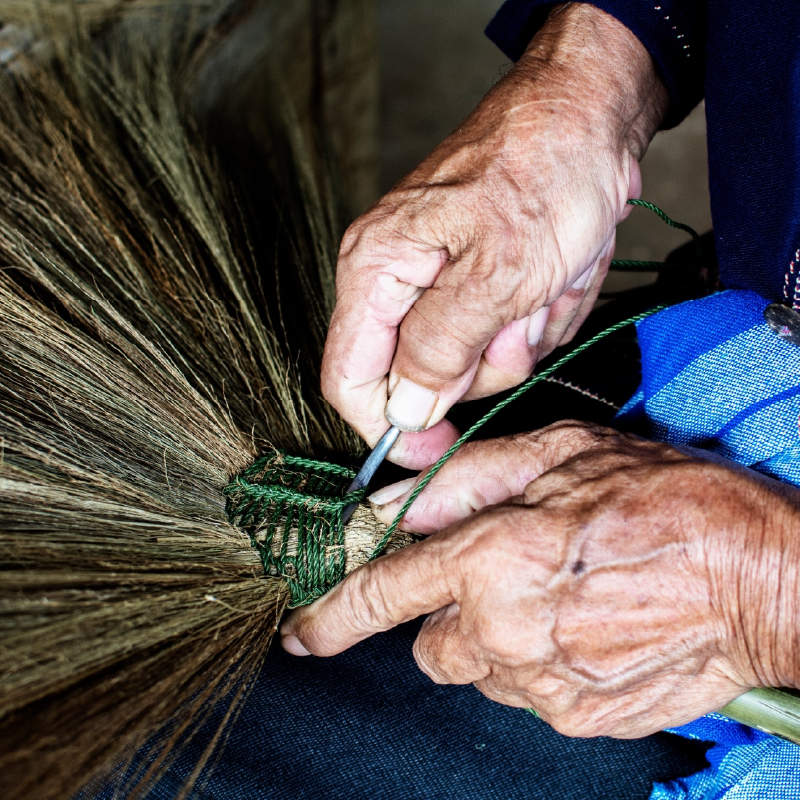
The Mpi have a spoken language but no written script. According to Mpi in Ban Dong, their forebears first settled in Chiang Rai after arriving in Thailand and intermarried with local Chinese communities before later relocating to Phrae. With many factories in the province, numerous Mpi are now employed by Thai companies. They also make and sell brooms, generating a stable income. Despite geographic, economic, and social differences, Mpi communities across regions remain connected and continue to intermarry.

Many Mpi are devout Buddhists but also hold strong animistic beliefs. They venerate their ancestors and maintain household altars, offering food and drink each morning in honor of Chao Fa, the guardian spirit of the village and home. They also believe in land spirits and malevolent forces, fearing that evil spirits may bring misfortune or even death.


The Mpi’s animistic beliefs and broom-weaving craftsmanship


Prayer

Heavenly Father, may the wind of the Holy Spirit sweep through the Mpi villages, awakening hearts to hear the call of Jesus, the Great Shepherd. May they come to know Him as their truest protector and the guide to eternal life, no longer living in fear of unseen misfortune or the shadow of death. We ask that You would raise up mission teams to serve the Mpi, using stories, songs, drama, images, and audio resources, as they are a people without a written language. May these also draw on familiar cultural symbols, such as elephants and brooms, to communicate the truth of the gospel in ways that are clear and meaningful. Through every sense, may they grasp the vastness of Your love and the fullness of Your salvation. We pray that oral Scripture in the Mpi language would take shape, memorable, rhythmic, and easily passed on, that they may become a treasured inheritance carried from generation to generation. In the name of our Lord Jesus Christ, Amen.

Embroidering the World Into Cloth

Nyahkur People

1,700 people  Buddhist  Evangelical Christians 0%

24Mar

Between the 6th and 9th centuries, the Mon people established the Dvaravati Kingdom in northern Thailand. The Nyahkur are descendants of the Mon who settled deep in the mountains and forests. Nyah means “people,” and Kur means “mountain.” The Nyahkur are one of Thailand’s lesser-known minority groups and today live in the central provinces of Chaiyaphum, Nakhon Ratchasima, and Phetchabun.

As a people closely tied to the forest and the natural world, the Nyahkur do not weave cloth but instead embroider what they see and touch onto fabric, creating symbolic images that tell stories. They incorporate patterns such as rubber blossoms, bird footprints, chain motifs, and grid designs.

Nyahkur life is simple and unadorned. When they are joyful, they sing and dance. Their music carries simple melodies deeply connected to the forest, often imitating the percussive tones and rhythms of nature. They sing traditional Pa-Re-Re folk songs, sometimes as a way for young men and women to express affection for one another.

The Nyahkur have a spoken language but no written script. Because they live alongside and intermarry with other ethnic groups, they have become culturally diverse. Today, most Nyahkur children and youth primarily speak Thai and the Isan Thai dialect.

Nyahkur daily life

Pa-Re-Re folk songs are accompanied by the Taphon, which is a large, barrel-shaped Mon drum. The music is gentle yet rhythmic, with lyrics that speak of greetings, daily life, teaching, praise, courtship, and storytelling. Singers are divided into male and female groups who respond to each other in quick exchange, with no limit to group size. They form a circle on the floor, with a music teacher or elder seated in the center. Someone recites lyrics for both sides, while women take responsibility for drumming. Pa-Re-Re songs are usually performed at night and sometimes continue until dawn.


Prayer

Heavenly Father, may believers and churches draw near to the Nyahkur, entering their forest homes and learning the wisdom woven into their way of life. In the melodies of their everyday songs, may Your love be carried into their hearts. Bless this humble people with the purity of heart that welcomes Your grace. When they hear the gospel and the name of the living God, may they respond with simple, childlike trust. Lord Jesus, You are the radiance of the Father’s glory, dwelling among humanity, the Word made visible, audible, and tangible. Reveal Yourself to the Nyahkur. May what they see and experience of You be embroidered into cloth, becoming visual testimonies that speak to their people and pass on the story of faith. May the robe of Christ’s righteousness become their garment of honor. In the name of our Lord Jesus Christ, Amen.

A Waltz Begins

Saek People

21,000 people  Buddhist  Evangelical Christians 0%

25Mar

The Saek people live along the lower slopes of the mountainous regions in northern Thailand. Due to the lack of written records, their origins are difficult to verify. According to Saek oral tradition, they trace their roots to Thừa Thiên–Huế Province in central Vietnam. In recent years, some scholars have suggested that the Saek may belong to the Kam–Tai* linguistic family originating from southern China.

Buddhist stupas stand quietly in Saek villages, yet the worship of mountain spirits, river spirits, tree spirits, house spirits, and ancestral spirits still holds an important place in daily life. Saek shamans (Moi Yau) are responsible for healing the sick and appeasing offended spirits. Before each harvest, villagers offer chickens and rice wine to the earth spirits.

The Saek farm using simple tools and water buffalo, with rice as their staple crop. In earlier times, poppy cultivation was a major source of income, but today the government encourages pig farming and chili cultivation as alternatives.

The Saek interact frequently with neighboring ethnic groups and have become highly assimilated into Thai society. Yet the distinctive “circle dance” performed by Saek women remains a unique cultural marker and an important expression of their identity.

Most Saek youth today speak Lao and Standard Thai, gradually forgetting their ancestral language. It is possible that within the next 40 to 50 years, the Saek language may disappear. In 1966, missionaries recorded gospel songs in the Saek language, but to this day, most Saek people have still never heard the gospel.

*The Kam–Tai language family is distributed across Southeast Asia and southern China, encompassing around 70 languages, with Kam and Zhuang among the most widely known.

Exploring Saek village culture
Prayer

Heavenly Father, You once moved missionaries to record gospel songs in the Saek language. We pray that these seeds of the gospel would sprout once again, that the Saek people may hear Your loving call and the hope of salvation. In this era of audiovisual media, raise up Christian professionals to partner with mission teams, using film, media, and even AI creative technologies to produce gospel resources that resonate with the Saek. May the message of Christ be woven into the familiar melodies of their circle dances. We ask that You open doors for collaboration between Christians and the Saek people through agricultural exchange, farming innovation, and marketing partnerships. May believers and churches walk alongside Saek villages with professional excellence, warmth, generosity, and selfless love, so that the Saek may see that the true source of love is God. In the name of our Lord Jesus Christ, Amen.

Ordained Before Marriage

Tai Bueng People

6,700 people  Buddhist  Evangelical Christians 0%

26Mar

The Tai Bueng are descendants of the Lao people. They speak a variant of Central Thai marked by tonal shifts, short, tremulous inflections mixed with Lao vocabulary, often ending sentences with “Bueng” or “Der.” Most live in the provinces of Buriram, Phetchabun, Nakhon Ratchasima, Chaiyaphum, Saraburi, and Lopburi.

According to oral tradition among Tai Bueng elders, their ancestors migrated from northeastern Laos to Thailand more than 200 years ago. Some believe they are descendants of Lao captives taken from Vientiane by King Taksin of the Thonburi Kingdom in the 18th century. Others suggest they were prisoners of war relocated to central and northeastern Thailand after King Rama III’s campaigns in Laos.

Traditional attire for Tai Bueng women includes a short, shoulder-baring vest with a cloth draped diagonally across the shoulder, paired with either chong kraben trousers resembling lantern trousers or a tube skirt. Elders often style their bangs swept back into a small lotus-shaped crest.

The Tai Bueng hold deep beliefs in the mystical powers of nature. They commonly rely on magic, amulets, prayer beads, divination, and fortune-telling to avert misfortune and seek blessing. They also believe spirits can influence health and daily life. During major Buddhist festivals, they make merit and offer alms to monks. When illnesses prove difficult to treat, they may invite ritual specialists to perform camphor divination rituals.

Tai Bueng men observe a Buddhist ordination rite. Candidates must be at least 20 years old and physically whole in all 32 bodily organs. Ordination typically takes place before marriage on an auspicious date. Candidates must practice fluent chanting, and their parents ceremonially present them to the temple with trays of flowers and incense, where they enter monastic training for one month.

Tai Bueng circle dance
Prayer

Heavenly Father, the Tai Bueng seek direction for life through divination and fortune-telling. May they come to know that the Spirit of Truth understands all things and is able to guide them on paths of peace and righteousness. May they discover that Your Word is a lamp to their feet and a light to their path. As they rely on amulets to protect themselves and their families, reveal to them that You alone are the Most High Protector, that those who dwell in the shadow of Your wings need not fear disaster or the terrors of the night. When they look to the mountains, forests, and rivers and sense the power of nature, may they perceive that all creation is made by You. The heavens declare Your glory, the flowers and grasses bear witness to Your loving care. May the Tai Bueng not only know blessing in this life, but also the hope of eternal life, understanding that the Lord Jesus has prepared for them a beautiful new heaven and new earth. In the name of our Lord Jesus Christ, Amen.

The Grandfather Guardian

Tai Gapong People

2,300 people  Buddhist  Evangelical Christians 0%

27Mar

More than a century ago, the ancestors of the Tai Gapong migrated westward from Gapong District in Bolikhamsai Province of what was once Laos. Crossing the Mekong River, they arrived in Thailand. As they carved out a life from the wilderness, strangers to the land around them, they longed for a powerful protector to safeguard their people. So they built a shrine, inviting the deities of heaven and earth, along with the spirits of the mountains and forests, to dwell there. Drawing on the name of an ancestor, they called the shrine’s guardian deity “Grandfather Mahesak” (Chao Pho Mahesak).

To this day, the Tai Gapong remain closely devoted to this grandfather guardian spirit, believing he protects them from misfortune and brings blessing, some even say he once helped shield them from devastating fires. People believe he may appear in the form of a striped tiger, a great serpent, or a white dog, or come in dreams as a towering, dark-skinned ancient warrior with a booming voice, holding a sword.

The word “Gapong” originally means “brain.” According to scholar Joachim Schliesinger, the Tai Gapong’s westward migration between 1844 and 1845 may have been the result of capture by Siamese forces as war prisoners, or possibly voluntary relocation. Their original homeland, Gapong District, has since disappeared from the map. Today, they live in Ban Varit village in Waritchaphum District of Sakon Nakhon Province, though few people are aware of their existence.

Grandfather Mahesak
Prayer

Heavenly Father, we ask that You would pour out heavenly wisdom upon the Tai Gapong. May they love the truth and seek guidance from the source of all wisdom, living fully into the meaning of their name. Lord, the Tai Gapong have longed for a mighty deity to guard their people through the generations. May they come to know that You are the Almighty Creator, whose steadfast love endures forever. You protected Abraham and his descendants, guarding them as the apple of Your eye and carrying them as an eagle carries its young upon its wings (Deuteronomy 32:10–11). In the same way, may the Tai Gapong turn to You and become a holy nation, a people belonging to God. In the name of our Lord Jesus Christ, Amen.

Everyday Life with the Ancestors

Tai Kaleun People

9千人  Buddhist  Evangelical Christians 0%

28Mar

Between 1765 and 1887, amid repeated warfare in Laos, the ancestors of the Tai Kaleun were displaced and eventually migrated to Thailand. Today, they are settled in Sakon Nakhon, Nakhon Phanom, Mukdahan, and Nong Khai provinces.

Although the Tai Kaleun identify as Buddhists, they hold deep reverence toward spirits. They believe household spirits and ancestral spirits dwell in the corners of their homes, watching over family members. Daughters-in-law and sons-in-law are not permitted to step into these ancestral spirit “territories.” The forest guardian spirit, known as Phi Pu Ta, is regarded as the protector of the community’s woodland areas. At both planting and harvest seasons, ritual offerings are made to spirits to pray for favorable weather and abundant crops. If someone is frightened or falls from a tree, it is believed their soul may have “fallen” and been left behind, requiring a soul-calling ceremony to retrieve it.

Spirit mediums, appointed by ancestral spirits and known as Jam, hold an honored status and preside over ancestral rites. The ritual for transferring mediumship is especially striking: a spirit-possessed medium runs through the village carrying a fish basket; wherever they stop, that household is believed to have been chosen for the next medium.

As intermarriage with neighboring groups increases and improved roads bring urban influence, cultural change is quietly unfolding. Younger generations now wear jeans instead of traditional sarongs. Mothers sing Thai pop or country songs to soothe their children rather than ancestral melodies. Tai Kaleun culture is gradually shifting.


Tai Kaleun music, dance, and handicrafts


Prayer

Heavenly Father, the Tai Kaleun place great importance on the spiritual realm. We ask that You grant gospel workers deep cross-cultural insight. Grant them the ability to understand the Tai Kaleun’s reverence for spirits, their profound familial bonds, and their longing for protection and security, so that they may find meaningful points of connection for the gospel and gently lead hearts toward You. Strengthen missionaries in their communication, enabling them to weave Your truth into stories that resonate within the Tai Kaleun cultural imagination, so that Your love may naturally enter their hearts. We also pray for the spirit mediums among them, who carry the spiritual burdens of their people. May they awaken from their identity as diviners and come to recognize Jesus as the perfect Mediator and Intercessor, responding to His call and becoming vessels that bring glory to God. In the name of our Lord Jesus Christ, Amen.

A Great Companion for Picnics and Drinks

Tai Wang People

20,000 people  Buddhist  Evangelical Christians 0%

29Mar

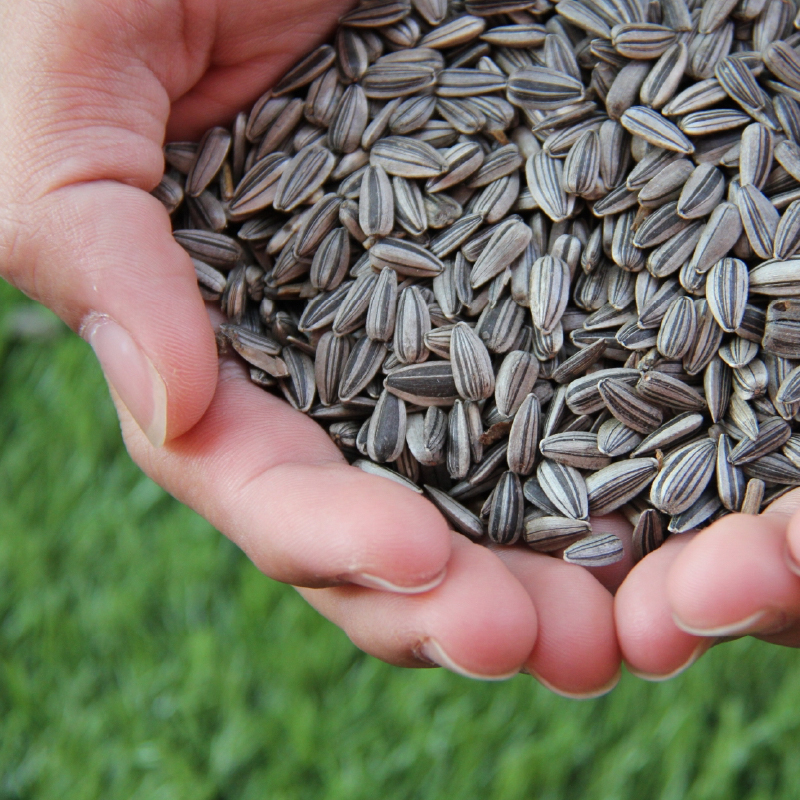
Do you enjoy cracking sunflower seeds? In Thailand’s far northern reaches, the Tai Wang are known for their seeds—fragrant, crisp, and widely exported to Europe and North America. Prior to the 1970s, they were also skilled weavers, but under the surge of modern ready-made clothing, this traditional craft gradually faded from everyday life.

Even so, elements of their textile heritage remain. The traditional attire of Tai Wang women, a black one-piece dress, still features rows of colorful horizontal embroidery along the hem. Their long-sleeved vests are fastened with small silver coin buttons, trimmed with red fabric at the edges, and paired with weighty silver bracelets and belts, creating a dignified and ornate appearance.

In the 19th century, the ancestors of the Tai Wang were captured during wartime by Siamese forces, taken from central Laos across the Mekong River into Thailand, where they lived as slaves for two generations. Today, about 8,000 Tai Wang reside in Phanna Nikhom District of Sakon Nakhon Province and nearby villages.

Linguists describe the Tai Wang language as similar to Thai, yet carrying the tonal flavor of Lao. The Tai Wang regard themselves as a distinct ethnic group, while also acknowledging deep connections with the Thai. Most practice Theravada Buddhism alongside veneration of guardian spirits. It is said that only a very small number of Christians are present within this community.

Prayer

Heavenly Father, we ask that You release the Tai Wang from the wounds of history and the burdens of daily life. May Your Spirit gently peel back the protective shells they have formed, softening their spiritual defenses so that Your love may touch every heart, bringing healing, peace, and true freedom. You see the care with which the Tai Wang harvest sunflower seeds in their fields; we ask that You also call gospel workers into the fields of the Tai Wang people—to cultivate the soil of their hearts, so that the seeds of the gospel may bear full and abundant grain among them, as sweet and fragrant as the seeds they gather. In the name of our Lord Jesus Christ, Amen.

A Rare Buddhist Community in Southern Thailand

Tak Bai Thai People

23,000 people  Buddhist  Evangelical Christians 0%

30Mar

Among the three southern Thai provinces where Muslims form the majority, the Tak Bai Thai (also known as Chao Pak Tai) are a quiet minority who have steadfastly preserved their Buddhist faith. They maintain a polite distance from the neighboring Pattani Muslims, interacting little, yet coexisting with mutual tolerance.

The Tak Bai Thai speak a Thai dialect that traces back to Sukhothai in north-central Thailand. Over time, it has blended with the brisk speech rhythms of southern Thai, carrying hints of Malay and southern dialectal tones. The result is a melodious, gentle way of speaking. According to scholar Joachim Schliesinger, when King Ramkhamhaeng of Sukhothai extended his influence into the Malay Peninsula in the late 13th century, thousands of Sukhothai Thais were relocated southward. They established temples in Pron and surrounding areas, meaning Buddhism had reached Thailand’s south even before the arrival of Islam.

Tak Bai District faces the sea breezes of the Gulf of Thailand, its coastline calm and unhurried. Centuries ago, trading vessels brought Chinese migrants to these shores, and some Tak Bai Thai today carry Chinese ancestry. Yet the exact origins of their forebears have faded, preserved only in indistinct fragments of oral history.

For more than 700 years, the Tak Bai Thai have lived in southern Thailand. As Islam expanded in the region, they held even more firmly to their Buddhist identity, wary of losing their distinct heritage.

Prayer

Heavenly Father, may Your Spirit, like the winds that blow in from the gulf, carry Your love into the hearts of the Tak Bai Thai, and bring to southern Thailand believers who love them. Grant missionaries cultural humility and patient endurance, that they may share the gospel in ways that are locally rooted and graciously relational. For a people who fear losing their identity, may they encounter in Christians a genuine respect that reflects Your own heart. You are just and merciful; You welcome every people, and the diversity of the nations reflects the richness of Your nature. We pray also for the separatist conflict in southern Thailand. May the love of Your kingdom, stronger than bloodline, ethnicity, or national borders, draw Buddhists and Muslims alike into Your household as brothers and sisters. May it break down divisions and lead them into peaceful unity. In the name of our Lord Jesus Christ, Amen.

Children of the Forest

Mani People

400 people  Tribal Religion  Evangelical Christians 0%

31Mar

Dark-skinned with tightly curled hair, the Mani people are more widely known by the name Sakai. They are Thailand’s only Negrito indigenous group, living in the southern provinces of Satun, Yala, and Narathiwat. Shy and wary of outsiders, their appearance resembles that of African peoples, and they share ancestral ties with Malaysia’s indigenous Orang Asli.

The Mani are generally divided into three groups: deep-forest dwellers, semi-settled communities, and permanently settled villagers. Those living deep in the forest continue the ways of their ancestors, residing in remote mountains. They hunt with poisoned arrows or darts, live in small wooden shelters, and have very little contact with the outside world.

The semi-settled group no longer lives in the deep jungle but maintains limited interaction with wider society in order to obtain daily necessities. They live in wooden houses yet wear modern clothing. Some travel to towns for work, purchasing food, clothing, and other essentials to bring back to their communities.

The permanently settled Mani live in modern homes and earn their livelihood much like other Thai citizens. Some families farm, grow fruits and vegetables, or raise livestock for income.

There was once a Mani boy adopted by King Chulalongkorn and brought to live in the Grand Palace. He was given the name Khanang Kirataka, and the king even wrote a play titled Ngo Pah based on him. Khanang’s story later became part of Thai literature.

Mani Villages
Prayer

Heavenly Father, the mountains are Yours, and the forests flourish under Your care. You have given the land to the Mani as their home. As they draw what they need from the hunt and from the waters, may they come to know You as the true source of provision and the Lord who shelters them. We pray that Christian communities would visit the Mani often, becoming good neighbors who show genuine care and build relationships of trust and mutual blessing. May songs and dances around the fire, and the sincere conversations shared there, become bridges for the gospel. Watch over those Mani who step beyond the forest. As they enter modern society, guard them from temptation and from exploitation. Help them grow in skill and confidence, secure the protection of their rights, and build healthy relationships with their neighbors. In the name of our Lord Jesus Christ, Amen.